


President Museveni has promised to allot 27 square miles of land in Mbarara District to a United Arab Emirates investor to set up model farm in the country. The investor, Dr Ahmad Eltigani Al Mansouri, will bring in new technology to fertilise cows that produce high milk, according to a press release from State House. The President reportedly promised to allocate the free land during a meeting on Friday at State House Nakasero. Dr Eltigani had called on President Museveni to discuss investment opportunities in the country. Dr Eltigani is also member of the Chamber of Commerce of Sharjah and the Chief Executive (CEO) one of UAE's largest dairy companies, Al Rawabi. According to a press release, the meeting which was attended by the State minister for Animal Industry, Joy Kabatsi, Uganda president Uganda Chamber of Commerce, Olive Zainab Kigongo, and Secretary to the Treasury, Keith Muhakanizi, also touched on other investment opportunities in different sectors. Kabatsi confirmed attending the meeting and said the investor plans to set up a model farm in the country. She said the model farm will be established in Nsala, a government land near Mbarara town. The minister noted that Dr Eltigani is introducing technology where a high milk producing cow is injected with some medicine which will make it produce many eggs. The eggs are then fertilised by a similar bull from a good milk producing herd and then the eggs are implanted in several other cows. She said this will increase the number of the high quality milk producing cows. “We are trying to do this for our local Ankole cow… we are going to have those cows deliver more and more. We hope this technology will help us to preserve our local Ankole cows,” Ms Kabatsi said. According to her, through the technology, a single cow can produce more than 50 calves of high milk producing gene. According to the minister, the technology is aimed at preserving the Ankole cows and ensure that those that produce more milk are not eliminated. She said the technology will be rolled to other parts of the country where good quality animals will also be selected for both meat and milk production. She added that through the technology, one cow can produce up to 50 calves within nine months. While the model farm will host the initial process, the target is to reach about 6,000 farmers who will benefit from the technology. On why the investor is coming at a time when the President has just returned the Biosafety Bill 2017 to Parliament over concerns on the local genes and a host of other issues, she said the technology will not modify anything, but simply working with the natural genes. “No no no, we are not modifying anything, we are just using our own genes, but only improving the quality,” she said. President Museveni assured him that the Government of Uganda will locate land to the investors on which more of such model farms for modern farming and factories for food and fruit processing will be built
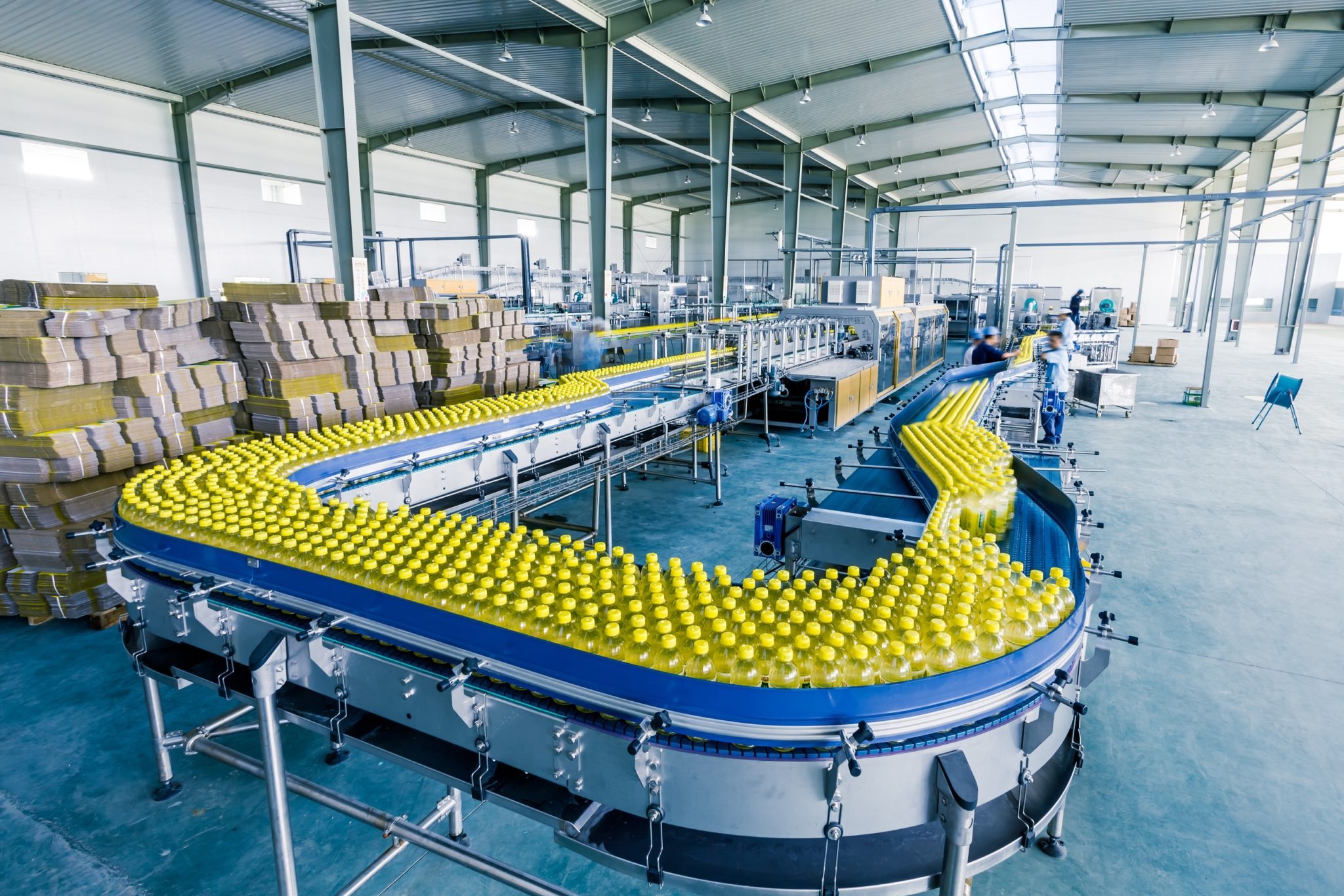
The food and beverage industry is one of the largest manufacturing sectors in terms of jobs and value added in most economies contributing US$77.5 trillion globally in 2017. A forecast overall CAGR of 2.9% over 2017-30 is driven in part by population growth in emerging markets within Asia Pacific and Middle East and North Africa but also by the shift to packaged and convenience foods in these regions. In 2017, total global disposable income accounts for the 65% of total world GDP (US$51 trillion in 2017) while consumer expenditure represents 56% of world GDP. Consumer expenditure on food and beverages is now US$6.6 trillion or 8.5% of world GDP. Asia Pacific is forecast to achieve the fastest growth in GDP, driven by the strong manufacturing and export-led economies of China and India as well as overall growth in private consumption. Growing private consumption in these markets is encouraged by the expansion of global foodservice chains introducing westernised food and beverages as well as the expansion of modern retailing formats and the raised presence of convenience products. GDP growth in Europe is more muted, with mature, saturated markets for food and beverages. Valueadded products are favoured by higher income and older consumers looking for natural ingredients/product formulations that exclude added sugar, salt, preservatives and artificial ingredients. With up to 24% of the population of Europe expected to be over 65 years by 2030, food and beverages in smaller quantities, with natural flavours and clear labelling are expected to be in higher demand. Rising incidences of diabetes, cardiovascular diseases and osteoporosis will drive the growth of functional foods fortified with vitamins and minerals. After the latest recession, and political and economic uncertainty, consumers in many countries have adopted a more cautious approach to spending. Consumers in developing markets tend to be more optimistic than those in developed counties when it comes to spending but many still focus on affordability as the primary purchase decision criteria. Demand for fast food restaurants and processed food in Nigeria is robust, fuelled by a fast-growing young population, rapid urbanisation, increasing affordability and demand for convenience As disposable income rises, consumer expenditure on food and beverages in the Asia Pacific and Middle East and Africa regions will increase from 53% of global expenditure in 2017 to 60% by 2030. Urbanisation and population growth are expected to aid this consumer spend. As a result, packaged foods and beverages are expected to become more accessible, with increased access to international brands and western food types. In developed markets consumers are more inclined towards purchasing added-value products, preferably with natural ingredients, Plant-based and alternative More than half of world GDP now comprises consumer expenditure In 2017, total global disposable income accounts for the 65% of total world GDP (US$51 trillion in 2017) while consumer expenditure represents 56% of world GDP. Consumer expenditure on food and beverages is now US$6.6 trillion or 8.5% of world GDP. Forecast growth in middle-class households is strongest in countries such as Nigeria and Egypt as employment and income opportunities rise in urban areas in these countries. Expenditure on food and beverages also increases at a high rate as these middle-income households emerge. Demand for fast food restaurants and processed food in Nigeria is robust, fuelled by a fast-growing young population, rapid urbanisation, increasing affordability and demand for convenience. In addition, Nigerians are switching from unpackaged, unbranded products to packaged products as the urban population reaches 51% and consumers look for packaged food products that are quick to prepare or ready to consume, such as noodles, dairy products, snacks and bread. In North America, the population aged 60 years and older constitutes the fastest-growing consumer segment in both the USA and Canada. This is expected to drive increased demand for a wide range of agespecific products and services, particularly health-related products. Many people are working longer than previous generations, have higher disposable incomes and have an active, healthy lifestyle. Manufacturers, aware of consumer demand for natural, nutritional and sustainable foods, are reformulating their popular products to increase appeal, achieving market share by acquisition of smaller, successful, niche providers and developing fresher products with natural ingredients and lower levels of processing that suit not just the older generation but also strong health trends throughout the general population. In Western Europe, the free-from trend is now well established and growing. Gluten-, meat- and dairy-free product ranges are increasing in variety, availability and affordability as the price gap between standard and free-from products narrows. Flexitarian, vegetarian and vegan populations are growing, but even among general consumers there are many who believe that gluten- or lactose-free products are good for digestion and that alternative high-protein sources are kinder to the environment as well as better for your health. In the UK, for example, sales of free-from packaged foods grew by 5% in 2016 as sales through supermarkets, hypermarkets and discounters expanded. In Turkey, 75% of all households are now in urban areas. Many adults are in professional employment and there has been a rise in the number of single person households. This has created demand for smaller-sized packs, processed meat and ready meals, with convenience and ease of preparation high on the agenda for busy working adults. Young, urban consumers are interested in new and sophisticated products for in-home consumption, as general political and economic instability has depressed the frequency of eating out. Western-style coffees and health and wellness products, such as fruit/herbal and green tea, are increasingly popular. Economic recession and trade embargos on Russia are heightening price sensitivity. Consumers are trading down with a shift from premium to mid-priced or mid to economy price segments, for example in tea, coffee and hot drinks. Manufacturers are responding by diversifying their product portfolios offering value for money lines at all price points as well as using promotional activity to maintain visibility and brand loyalty. Domestically produced drinks such as Russian kompot juice drinks, kvass non-cola carbonates or sugar-free and vegetable-based soft drinks are widely available and popular.
Demand for foodstuff in Africa to grow due to rapid urbanisation
folder_open Foodstuff Market , Industry Reports
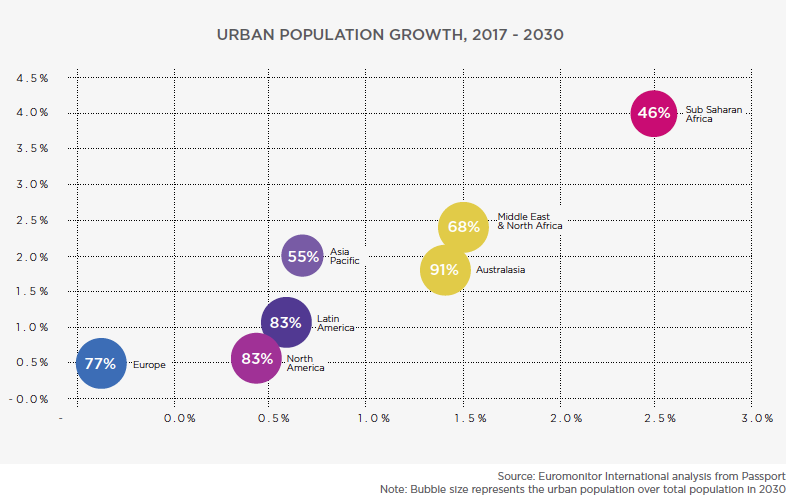
By 2030, 60% of the total world population will be living in urban areas. Urbanisation offers a dense, concentrated market and opportunities for retail infrastructure and products tailored to newly affluent consumers as well as large sections of the community on low incomes. Growth in urbanisation is expected to surpass overall population growth in all regions. High urbanisation growth, as demonstrated in Sub-Saharan Africa, offers potential as new cities coalesce around natural growth in the population, migration from rural areas and reclassification/upgrading of former slums into urban areas. Urbanisation growth in the Middle East & North Africa region is also expected to be strongly influenced by large-scale infrastructure development, agricultural and land reform and the development of older and new cities. Growing urbanisation in these regions influences demand for food and beverage categories differently. Demand for higher-priced convenience categories such as RTD tea and coffee and higher-grade olive oils is greater in the Middle East and North Africa due to higher disposable income levels while more mass market products, such as beverages (bottled water, packaged tea) and dairy products are in greater demand in Sub-Saharan Africa. In Nigeria, staple foods, such as a rice, pasta and noodles, have seen strong growth In Nigeria, urban population has been price sensitive due to economic uncertainty which has forced unit prices for food and beverages to rise strongly in recent years. Staple foods, such as a rice, pasta and noodles, have seen strong growth. Instant noodles, for example, are increasingly popular and are seen as convenient to prepare, fairly cheap, and widely available. Dufil Prima Foods’ Indomie noodles brand is now a market leader as a result of good incentives for distributors, strong below-the-line advertising, frequent consumer promotions, as well as the availability of a variety of pack sizes and flavours. In Manila, one of the most densely populated cities in the world, the importance of product convenience has been prominent to address the demand of the urban population. Companies such as AB Nutribev have found success with their Vitamilk product, available in 300ml glass bottles and positioned as a healthy energy drink that can help address hunger and tiredness. It targets the increasing demand for on-the-go consumption. In 2017, Purefoods-Hormel Co started construction of new production facilities for hotdogs, chicken nuggets, corned beef and luncheon meat in the Philippines to meet demand in the mid-to-high end of the market. Modern retailing in the Philippines is expanding more rapidly than traditional grocery retailing, offering greater opportunities for hot and chilled foods. Highly urbanised societies in Europe create a different profile of product demand. Meat substitutes and hot cereals are examples of key growth categories on the back of strong health and wellness concerns. For example, in the mature and saturated processed meat market in Germany, meat substitutes are now a small but strongly performing category. Meat consumption is changing with a growing number of vegetarians and those following a vegan lifestyle. In addition, many consumers aim to lower their meat consumption as part of a healthy heart lifestyle. This emerging consumer group presents significant opportunities for growth with many meat processors now venturing into this category to ensure full portfolio coverage within this market. Pure discounter Aldi offers a wide range of vegan options including burgers, schnitzel, meatless hotdogs, meatless meatballs, chickenless nuggets and meat-free mince and in December 2017, it launched its range in an additional 17 countries.
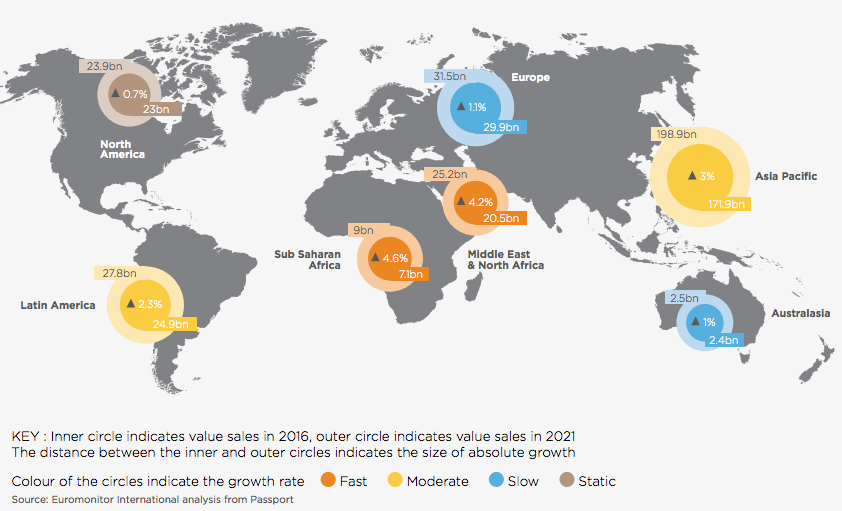
By far the fastest growth in cereals stems from Africa, led by Sub-Saharan Africa, but with the Middle East and North Africa also growing strongly. Total global market value of pulses, grains and cereals reached US$279.7 billion in 2016 and is forecast to reach US$286.4 billion in 2017. In both cases, this is from a small base, led by consumers in lowerincome areas of these regions trading up to packaged versions of staple cereals. In most developed markets, sales of cereals are at saturation point, with little room left for growth. North America, following a decline over the review period, is expected to be stable to 2021. Diversifying diets and moves away from carbohydrate-heavy foods mean these are difficult markets to navigate. Growth prospects come instead in cereals that offer newness and/or healthy options (Asian-style noodle dishes, quinoa-based pasta) or offer added-value convenience (microwaveable rice, chilled pasta and noodle dishes). Breakfast cereals face similar prospects, with a reputation for being unhealthy and due to competition from other convenient options, such as breakfast bars. However, health positioned options such as granolas and mueslis are faring better. Alongside North America, growth is also sluggish in the more developed Western European markets: here maturity combines with trends away from carbohydrate-based meals to create a difficult operating environment. Value growth is supported by rising unit prices. The fastest growth is visible where there is still room to grow in consumption levels of packaged staples and where breakfast cereals are at an earlier stage of development, with a healthier image – this is focused on Sub-Saharan Africa but also includes areas in North Africa, parts of Asia, and Central America. Dynamic growth in Sub-Saharan Africa is the result of consumers trading up to packaged products. In Nigeria, for example, sales of instant noodles are rocketing as they are low priced (in a period of relatively high pricing on imported rice), easil available and convenient to prepare, and are particularly popular among urban families with young children.
Kenyan food manufacturer Ariel Foods targets Nigerian market
folder_open Foodstuff Market , Industry Reports
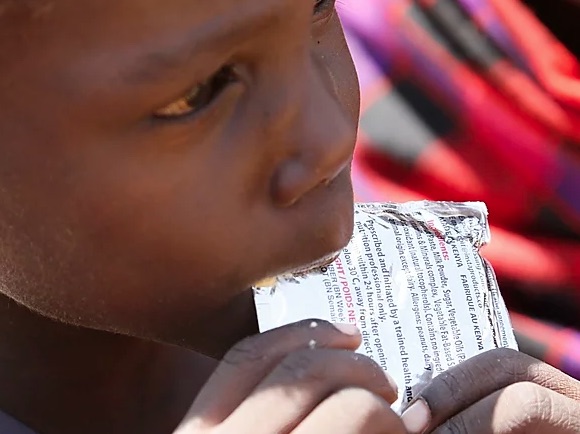
Ariel Foods, a renowned Kenyan therapeutic foods manufacturer famous for its food supplements for malnourished people worldwide is expandeding its operations in West Africa through its base in Nigeria seeking. The food company aims to tap into the wider West African market through its operations in Nigeria. Insta’s therapeutic foods are a high calorie combination of peanut paste, sugar, oil and milk powder which is fortified with 23 vitamins and minerals. Severely malnourished people, who cannot digest solid food portions or receive supplements intravenously, feed on the supplement for six weeks before progressing to other foods. Insta Products has been operating for 16 years. Its products are distributed regionally but they are also shipped to needy individuals in countries such as Afghanistan, Syria, Pakistan and Yemen among others places, Ariel Foods’ new Nigerian factory will be set up in Alaro City, a mixed-income development featuring industries, logistics, offices and homes in Lagos State. The city is backed by Rendeavour, Tatu City’s owner and developer. Rendeavour is also developing other similar cities in Africa including two in Ghana at King City and Appolonia, Kiswishi in the Democratic Republic of the Congo and Roma Park in Zambia. “Ariel Foods is proud to expand its production to Nigeria, and to play a major role in food and population security in West Africa through the production of ready-to-Use therapeutic foods to feed malnourished children and to supplement the diets of persons with special nutrition requirements,” said Dhiren Chandaria, owner of Ariel Foods. Chandaria also owns Kenya-based Insta Products which is a major supplier to UNICEF and World Food Programme relief initiatives. Lagos State Governor Babajide Sanwo-Olu welcomed the Kenyan firm’s investment. “I am pleased to witness the start of operations of Ariel Foods, which has built a remarkable facility in less than one year,” he said. “The confidence of international and Nigerian investors is a testament to Alaro City as the location of choice for businesses in the Lekki Free Zone, and to the ease of doing business in Lagos State.” Insta, located in Athi River’s Export Processing Zone, produces food supplements for malnourished people. Ariel Foods, a renowned Kenyan therapeutic foods manufacturer famous for its food supplements for malnourished people worldwide is expanding its operations in West Africa through its base in Nigeria seeking. The food company aims to tap into the wider West African market through its operations in Nigeria. Insta’s therapeutic foods are a high calorie combination of peanut paste, sugar, oil and milk powder which is fortified with 23 vitamins and minerals. Severely malnourished people, who cannot digest solid food portions or receive supplements intravenously, feed on the supplement for six weeks before progressing to other foods. Insta Products has been operating for 16 years. Its products are distributed regionally but they are also shipped to needy individuals in countries such as Afghanistan, Syria, Pakistan and Yemen among others places, Ariel Foods’ new Nigerian factory will be set up in Alaro City, a mixed-income development featuring industries, logistics, offices and homes in Lagos State. The city is backed by Rendeavour, Tatu City’s owner and developer. Rendeavour is also developing other similar cities in Africa including two in Ghana at King City and Appolonia, Kiswishi in the Democratic Republic of the Congo and Roma Park in Zambia. “Ariel Foods is proud to expand its production to Nigeria, and to play a major role in food and population security in West Africa through the production of ready-to-Use therapeutic foods to feed malnourished children and to supplement the diets of persons with special nutrition requirements,” said Dhiren Chandaria, owner of Ariel Foods. Chandaria also owns Kenya-based Insta Products which is a major supplier to UNICEF and World Food Programme relief initiatives. Lagos State Governor Babajide Sanwo-Olu welcomed the Kenyan firm’s investment. “I am pleased to witness the start of operations of Ariel Foods, which has built a remarkable facility in less than one year,” he said. “The confidence of international and Nigerian investors is a testament to Alaro City as the location of choice for businesses in the Lekki Free Zone, and to the ease of doing business in Lagos State.” Insta, located in Athi River’s Export Processing Zone, produces food supplements for malnourished people. Insta, located in Athi River’s Export Processing Zone, produces food supplements for malnourished people.
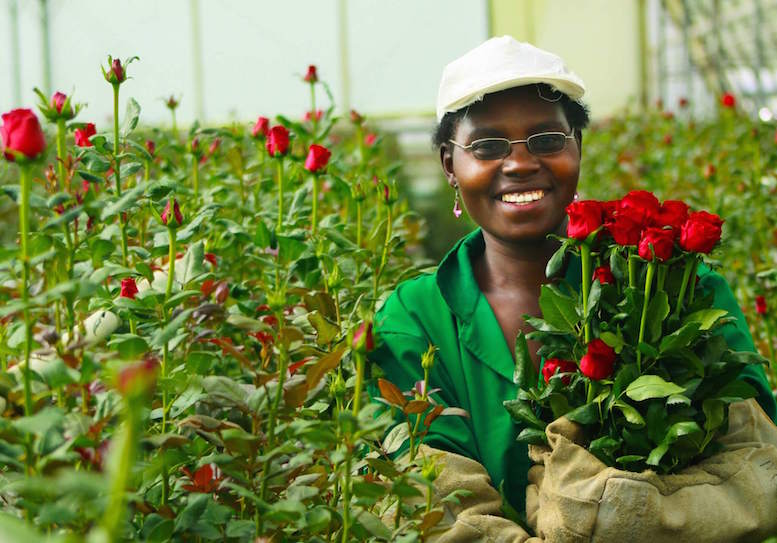
Kenya’s Blooming Flower Industry
folder_open Company Profiles , Industry Reports
Kenya's economy largely relies on the agriculture sector. Horticulture sub-sector is one of the top foreign exchange earners for the country generating approximately US $ 1 billion annually. The sub-sector contributes roughly 1.25% to the national GDP while flower exports contributes nearly 1% from the flower industry. It has grown in significance to a vibrant flower industry worldwide. The flower industry is also one of the largest employers in the country, providing employment to over 100,000 people directly and an estimated 2 million people indirectly, mostly women. It is estimated that in Kenya, over 500,000 people, including over 100,000 flower farm employees depend on the floriculture industry impacting over 2 million livelihoods. The main production areas in Kenya are around Lake Naivasha, Mt. Kenya, Nairobi, Thika, Kiambu, Athi River, Kitale, Nakuru, Kericho, Nyandarua, Trans Nzoia, Uasin Gishu and Eastern Kenya. The main cut flowers grown in Kenya are roses, carnations, and Alstromeria. Other flowers cultivated include, Gypsophilla, Lilies Eryngiums, arabicum, hypericum, Statice, a range of summer flowers amongst many others. Kenya is the leading exporter of rose cut flowers to the European Union (EU) with a market share of almost 40%. Approximately 50% of exported flowers are sold through the Dutch Auctions, although direct sales are growing. In the United Kingdom, supermarkets are the main outlets. Over 25% of exported flowers are delivered directly to these outlets, providing an opportunity for value addition at source through sleeving, labelling and bouquet production. Kenyan flowers are sold in more than 60 countries. Europe accounts for nearly 70% of Kenya's cut flower exports and coronavirus restrictions had slashed daily orders by half, threatening thousands of jobs in East Africa's richest economy. The biggest buyers of cut flowers are the EU and the US, but the biggest growers and exporters are the Netherlands, Ecuador, Colombia, Kenya and Ethiopia. Roses, carnations and chrysanthemums are the most popular blooms. Kenya’s Blooming Flower Industry The industry continues to attract investors due to solid infrastructure, favourable climate, global-positioning of Kenya and a productive workforce. It comprises large, medium and small scale producers who have attained high management standards and have invested heavily in value addition through adoption of modern technology in production, precision farming and marketing. The farmers utilize technologies some of which includes drip irrigation, fertigation systems, greenhouse ventilation systems, net shading, pre-cooling, cold storage facilities, grading, bouqueting, fertilizer recycling systems to prevent wastage, wetlands for waste water treatment, artificial lighting to increase day length, grading/packaging sheds, and refrigerated trucks. https://www.youtube.com/watch?v=lwuXwN96O-Y On the global front, a growth of 5% is anticipated every year over the next five years. To be a part of this opportunity, Kenya is going to continue investing and expansion in growth rate than previous years. Going forward, the industry will continue benchmarking itself against other producer countries. Information thus gathered will be useful in formulating strategies, to capture prospects of expansion in current and emerging markets. The Kenya Flower Council is a voluntary association of independent growers and exporters of cut-flowers and ornamentals, established in 1996, with the aim of fostering responsible and safe production of cut flowers in Kenya with due consideration of workers welfare and protection of the environment.Against this background the Council has become the focal point for industry representation, promotion, and compliance to pertinent local and international standards deemed necessary to secure, expand and sustain markets.

The Government of Uganda is constructing a US$11.4m Mwena Aquaculture Park, under the ‘Promoting Environmentally Sustainable Commercial Aquaculture’ (PESCA) aimed at enhancing aquaculture development and management in the country. The project is being constructed by Engpro International, a local Engineering Company in Uganda to serve both Apac and Kalangala Districts in pond and cage farming. It will incorporate 81 Fish ponds, an Office block, a Feeds Store, a Hatchery for Nile perch and Catfish with a capacity of producing 5 million fingerlings annually and road works construction. Inaugurated by the Minister of State for Fisheries, Hellen Adoa the project will help boost the fish harvests in the country and create employment opportunities for both women and youths. Joyce Ikwaput Nyeko, the Commissioner Aqua Culture Development and Management at the Ministry of Agriculture, Animal Industry and Fisheries revealed that a feasibility study was conducted in 2012 with support from the European Union and has a gender balance complaint multiplier effect in the Social Economic transformation of the population and the country. According to the Ugandan Ministry of Finance report, fish imports into the country amounted to US$13 million. The country exports fish worth US$176m mainly in frozen, chilled or smoked form. https://www.youtube.com/watch?v=YcbpI81KbuA The fisheries sector continues to be an important social and economic driver, leaping other sectors to become Uganda’s second largest foreign exchange earner with a 2.6 per cent GDP and 12 per cent to agricultural GDP. Uganda government is also constructing regional mechanization centers in Buwama – Mpigi district (Central Region), Agwata – Dokolo district (Northern Region), Kiryandongo district and Mbale district. The regional mechanization centers will decentralize the irrigation and water for agriculture production services. They will be equipped with tractors and maintenance tools/ mobile workshops. In addition, they will host trained operators and Senior Agricultural Engineers whose role is to provide advisory, servicing and maintenance as well as coordination with the farmer groups.
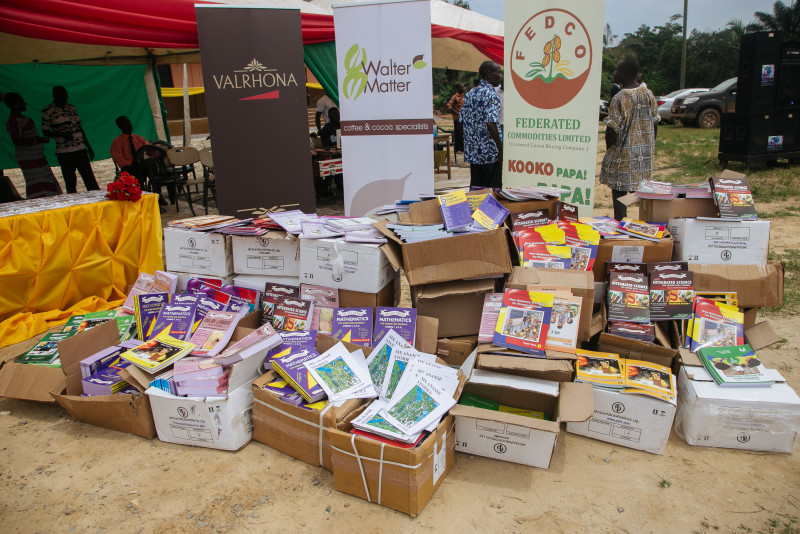
Cocoa is essential to the livelihoods of up to 50 million people around the world, including around five million smallholder farmers. West Africa, mainly Ghana and Ivory Coast, produces about 70% of the world’s cocoa on 1.5 million farms, with the majority of the crop coming from small farms (3-5 hectares of land). Recent studies criticising the global chocolate industry for exploitative practices have concerned ethical consumers. Cocoa farmers only earn about 6% of the chocolate industry’s total revenues. Leading chocolate companies have since 2001 made pledges to end widespread abusive labour practices, but continue to fall short. In Ghana, local firm Federated Commodities has shown it is only by improving the cocoa supply chain, with experienced local oversight, that ethical, sustainable and profitable cocoa and chocolate industries can exist. CEO Hajia Maria Adamu-Zibo is ready to form international partnerships to take the Ghanian cocoa sector forwards. Cocoa farmers only earn about 6% of the chocolate industry’s total revenues Cocoa farmers work very hard, often under strenuous conditions, yet don’t earn enough to cover their basic needs. Although the worldwide chocolate market is valued at USD 103 billion, on average, farmers earn only about 6% of the chocolate industry’s total revenues. Many cocoa farming communities in West Africa lack access to education, potable water, and basic social amenities. Cocoa is essential to the livelihoods of up to 50 million people around the world, including around five million smallholder farmers Furthermore, labour practices on cocoa farms are problematic. In a bid to reduce production costs, farmers are inclined towards child labour. An estimated 1.56 million children work on cocoa farms in Ghana and Ivory Coast. About 43% of children aged 5-17 in these two countries are engaged in hazardous work, including exposure to agrochemicals without protective equipment, the use of dangerous tools and working at night. Despite years of pledges from chocolate manufacturers to end abusive employment practices in their supply chains, there has been a 14% increase in the number of children working in cocoa farms over the past 10 years, accompanied by a 62% rise in production. Child Labour in the Cocoa Industry The Director of Impact at the Fairtrade Foundation (www.Fairtrade.org.uk), Louisa Cox, cited in a Guardian article suggested that ‘long-term finance, training and technical services, and helping farmers diversify beyond cocoa’ is needed to help address child labour in the cocoa industry. These are all measures that Federated Commodities (FedCo) – an indigenous licensed buying company (LBC) founded in 1996 in Ghana – has a sustained track record of taking. “As an affiliate company of Global Haulage, FedCo engages in the supply of traceable and certified cocoa beans to help promote sustainability in cocoa production through community development and capacity building of farmers. Under this programme, farmers are trained on adult literacy and good agricultural, business and social practices, which empowers them economically,” says Hajia Maria Adamu-Zibo, the Managing Director of Federated Commodities, in an interview with AfricaLive.net. “The wellbeing of the farmer is of high priority to us. We strive to have a relationship beyond just transactions with the over 50,000 farmers who make up our supply base. We were amongst the first indigenous privately owned firms to go into sustainability. FedCo has achieved several milestones since then. We have 300 employees, 1,700 purchasing clerks, a larger fleet of vehicles, as well as an affiliate company that does not only cocoa haulage but also other endeavours related to the industry.” “We have also touched the lives of countless farmers and communities across Ghana through social interventions. The FedCo Cocoa Farmers Association consisting of about 15,000 farmers provides social benefits, including funeral benefits, and loan facilities to set up farms, to buy agricultural inputs, and to send their children to school. A total of 3,000 farmers have benefited from various forms of financial support in excess of USD 500,000 towards their farming activities. Together with our partners, FedCo has since 2012 supplied over 44,000MT of sustainable cocoa beans and invested about USD 7 million in sustainability, through training, cash premium payments, and various projects.” “Access to financing has always been a problem for the farmers. Farmers’ lives are improved when we facilitate access to inputs and credit facilities so that they effectively carry out their pre-and post-harvest work. We are big on helping farmers by assisting them add value their livelihoods. Going forward, we intend to help more farmers improve their living income by helping them get sustainability programs that will see them get paid more.” On diversification beyond cocoa, Hajia Adamu-Zibo says, “We have diversified into the cashew market which gives us a great alternative during the lean period of the cocoa season. Part of our community engagement drive is getting into farm service agreements with individual farmers. Deals like that will see us take care of their yield in exchange for the commodity after harvest. Diversification helps farmers earn more because they are not banking their livelihoods on just one crop. Processing is part of our long term plan as well.” Empowering Farmers in Africa Federated Commodities has big dreams for farmers in Ghana. “We go beyond just buying. We really try to do more for the farmers and communities,” says Hajia Adamu-Zibo. The LBC believes that partnering with academic institutions to impart technical skills holds promise for improving farmers’ lives and the cocoa industry. “We have put in place programmes to help improve the quality of life of our farmers. For instance, we have worked with local educational authorities to build schools that will help give youth relevant skills to work in the industry. So far, we have constructed seven schools and intend to build more,” she says. “Training programmes for farmers are also part of our agenda so that they can learn how to diversify crops and make use of crop by-products. We are also teaching them financial literacy skills to empower them to better manage their finances. Since October 2018, about 2,032 farmers have enrolled in FedCo’s Village Savings and Loan Programme, run in partnership with Solidaridad West Africa, which is enabling farmers to save for their futures and fund their ventures. We have had interactions with the Kumasi Technical School about the possibility of their students making tools that can help farmers break the cocoa. Discussions are also ongoing on how we can mechanise more processes.” With more partnerships and funding, Federated Commodities aims to be able to do more, for more communities. “Our activities have really enhanced communities. We have also built libraries, computer centres, community halls and over 100 boreholes. It makes me so happy to see FedCo’s impact in the lives of farmers and in communities, and how appreciative they are,” says Hajia Adamu-Zibo. Case Studies Valrhona Working with Valrhona to improve educational facilities in Ghana’s Western Region. FedCo has a long-term agreement with Valrhona, a French premium chocolate manufacturer that sources and transforms the finest cocoa to make high-quality chocolate. The agreement allows Valrhona to source cocoa directly from 1001 producers in eight communities in Ghana’s Western region. Community leaders stressed the importance of improving educational facilities. A subsequent assessment of schools revealed 30% of students were learning in unsafe conditions, while a third of children were out of school. In 2017, Valrhona launched a five-year project to improve access to education and learning conditions for the communities’ 4882 children. https://www.youtube.com/watch?v=L8de58PVmtE FedCo-sponsored Asamankese Cocoa Pilot Project Cocoa farming is the economic base of Asamankese town, in Ghana’s Eastern Region, but the farmers have struggled with skilled labour and agricultural inputs—which has contributed to limited yields and little to no profit. FedCo has been working with farmers in Asamankese to improve production and yield by providing skilled labour and inputs such as fertilizer. However, the project is currently on hold due to funding challenges. Hajia believes that this project has lots of potential and that many more similar ones can be done; “in spite of these initial challenges we are determined to pursue this and similar projects because we believe that they offer significant benefit to our farmers”. FedCo is open to new partnerships that will allow the project to recommence. https://www.youtube.com/watch?v=hWtxL77J5xs Revamping West Africa’s Cocoa Industry As one of the top foreign exchange earners for Ghana, cocoa is central to the country’s economic development. The ‘cash crop’ has sustained lives over generations and successive governments have explored interventions to revamp the sector. Interventions taken by the Ghana Cocoa Board (Cocobod) under President Nana Akufo-Addo’s administration, have since 2017 included increasing volumes of cocoa production through improved agronomic practices and increasing producer prices. In September 2020, the government announced a 28% increase in the guaranteed producer price it pays to farmers for the 2020/21 growing season. The price rise is due to the implementation of a price floor of USD 2,600 per tonne and a living income differential of USD 400 per tonne, to put more money into the hands of farmers. Ivory Coast is taking similar steps. “Indeed, cocoa has been an important commodity for our country. Cocoa is not just a cash crop for us; it has also become part of our politics. The cocoa sector feeds about 800,000 people in the country and issues that affect the industry can be quite emotive. Unfortunately, our industry has suffered a dip in production in recent times occasioned by climatic changes as well as factors such as disease. The impact of the measures the government has put in place will start being felt in a few years, with the expected rise in volumes of production,” says Hajia Adamu-Zibo. “Adding value to our cocoa is also part of our national strategy. Value addition will help increase the value of our product, boost our standing in the global cocoa industry, and lead to job creation.” “The government is focusing on increasing production while also encouraging diversification in the overall agriculture sector to improve the sector and boost our national revenue. Cocoa and cashew processing will help add value and put even more people to work. It will also help more companies like us benefit from the industrialisation drive of the Ghanaian economy. Other commodities the government is looking at include coconut and rice production, to ensure the agricultural industry reduces its reliance on cocoa. This will give Cocobod room to better strategise and add value to cocoa.” “In the future, cocoa will not be the dominant crop in Ghana if our diversification plans come to fruition. Cocoa will still be an important and relevant crop but it won’t be as prominent as it is now.” Partnership: The Path To International Growth With the African Continental Free Trade Area (AfCFTA) agreement set to commence in January 2021, Hajia Adamu-Zibo believes that Ghana stands to gain greatly as long as the country improves its skill base and makes production funding more accessible. “We are well endowed with natural resources and qualified hardworking personnel. The relevant bodies are doing their best, but we are still not as sophisticated as we need to be for the international market. The majority of items we import can be produced locally, but we lack the finesse required to make our products more attractive. A lack of focus on perfecting our products opens the door to a high import rate. Our country must improve its skill base,” she says. “The other obstacle in the way of our production capacity is funding. The cost of funding in Ghana is very high compared to other countries. If the interest rates eat so much into your margins, then you can barely run a profitable venture. If we work on the rate and make funds more accessible, we will create room for more innovation and production in our country.” Federated Commodities is exploring global partnerships to tap more into the global cocoa industry. “We are looking to seal important contacts in Europe and America as we seek sustainability partnerships that will be of mutual benefit. In Africa, we are looking at maybe getting partners in Cote D’Ivoire as well as South Africa because these are two strong cocoa markets. We possess the knowledge as far as cocoa is concerned and an ideal partner would be someone who has the technical expertise to process on a large scale,” says Hajia Adamu-Zibo. “Ghana can be the hub when it comes to business in all spheres if we adjust our tariffs. That way, we will favourably compete with Togo and Cote D’Ivoire. Maybe we also need to diversify our languages and get proficient in French. Ghana is surrounded by francophone countries and that should push us to learn French to properly transact.” Skills Development: Optimising for Greater Heights As Ghana seeks to grow its economy and compete more on a global scale, Hajiya Adamu-Zibo calls on the government to, “place more emphasis on skill development.” “We must cultivate a culture of perfectionism so that we develop the right disciplines and products that serve our people and beyond. If we have the right skills, we will have the right mindsets and ultimately the right products. Of course, we have to tackle issues of cost and infrastructure but I believe skills should be our priority,” she says. On Federated Commodities’ ambitions to make greater contributions to the global sustainable cocoa industry, as well as Ghana’s agricultural sector, Hajia Adamu-Zibo, says, “There are a lot of challenges in the cocoa industry, and the competition is very keen, yet we have a loyal customer base. I believe Federated Commodities must be doing something right and that is why our farmers are happy with us.” “We need good partnerships to help our farmers so that we can keep them motivated. We are looking at skill development, education sponsorships, loans and savings programmes and host of other programmes. Our consistency has made us very trustworthy and reliable in a very competitive environment. In a decade, I foresee a company full of diversified professionals that can thrive in many fields and make this company a huge name in Ghana and beyond.”
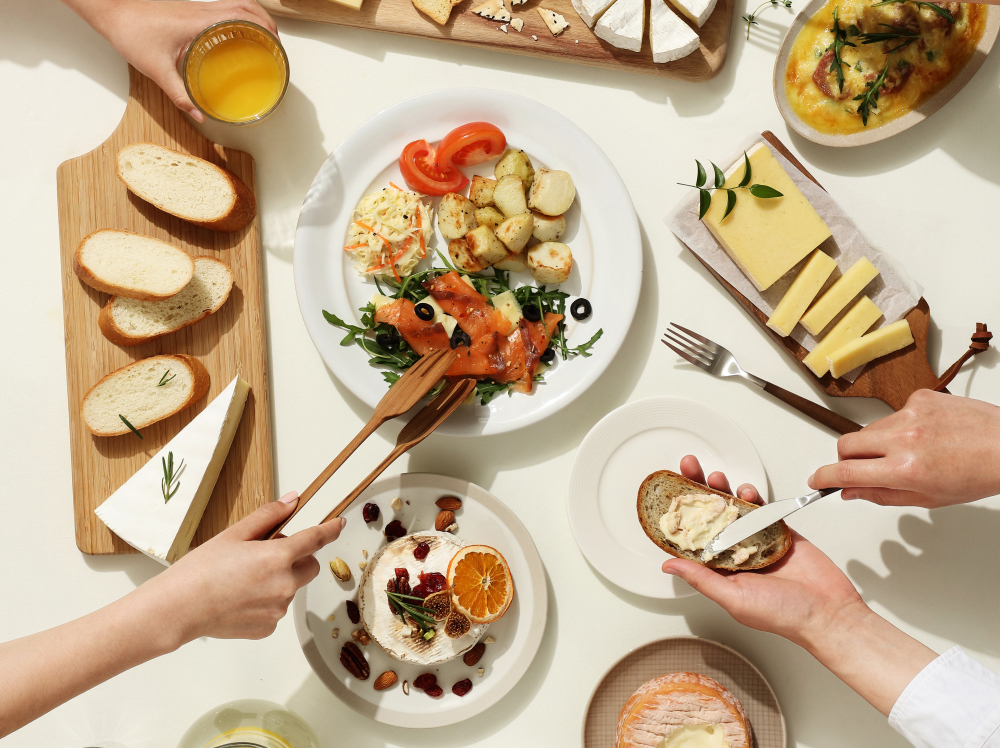
Saudi Arabia embraces European cheese as imports from the EU increase
folder_open Company Profiles , Industry Reports
The European Union’s (EU) imports of European cheese to Saudi Arabia increased to 42,476 tonnes in 2020, an annual increase of 15% on the 36,888 tonnes imported in 2019, according to the latest research from CNIEL, the French Dairy Board. France is the second-largest dairy producer in the EU with 23.8 billion litres produced in 53,800 dairy farms in 2019 and continues to command the attention of Saudi Arabian cheese aficionados with well-known cheese such as Camembert and Brie remaining popular choices for all culinary occasions. Other French cheese varieties increasing in popularity in Saudi Arabian cooking includes blue cheese, like Fourme d’Ambert or Bleu d’Auvergne, slightly salty cheese made of cow’s milk; Comte, which has the highest production volume with approximately 64,000 tonnes annually; and fresh cheese, which is made from whole or skimmed milk and cream and can be used as an appetizer, a snack or creamy desert. Marie-Laure Martin, International Project Manager from CNIEL, said: “Both hotels and consumers in Saudi Arabia are continuing to choose French cheese for their cooking and baking, signalling a real awareness from the Saudi consumer in using only the finest produce that is known for safety, superior quality and traceability. “French dairy farms adhere to a national charter of good cattle breeding practices with 250 analyses per farm per year for milk pricing in accordance with its composition and quality. Also, traceability is provided between the farms and the collection tanker, and then along the entire processing chain right to the end-user to ensure world-class food safety. Technology has made it possible to make our food chains completely transparent – something we know our Saudi consumers welcome.” In 2020, the French Dairy Board launched France, Land of Milk, which was created to highlight the need for sustainable development within the French dairy sector. France Terre de lait covers the entire dairy supply chain by focusing on four key areas of sustainability performance, including economic and social, food safety, food nutrition, and responsible production (animal welfare and the environment). Eight specific goals have been set for 2025 to align French sustainable dairy farming with the goals and targets set out by the UN’s 2030 Agenda. French cheese is also gaining popularity in the wider Gulf Cooperation Council (GCC). Kuwait has seen imports up 9% from 5,328 tonnes in 2019 to 5,788 tonnes in 2020. Despite restrictions on the tourism and hospitality market, the UAE imported 15,710 tonnes in 2020, further underscoring the demand for French cheese in the UAE. “In recent years we’ve become acutely aware of the evolving tastes of Middle East residents and tourists as they gravitate towards high quality and flavourful French dairy products. We are undertaking several campaigns to highlight the unique characteristics of French dairy as this region continues to be an important export market for many leading producers from France,” added Martin.
Preliminary request for participation in the trade show
place
calendar_today
Preliminary request for visitor registration
Visitor Registration
place
calendar_today