
Chinese Investors Open Slaughterhouse to Export Donkey Meat from Ethiopia
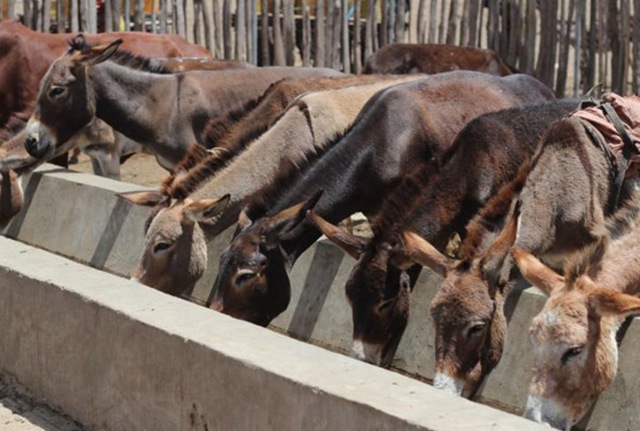
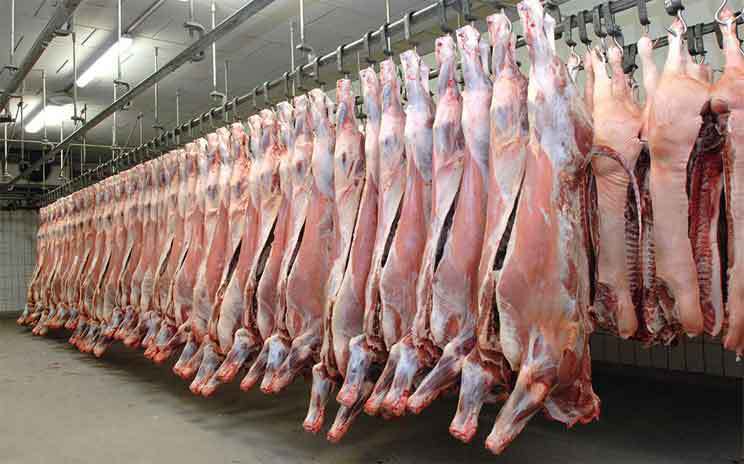
Ethiopia will start exporting donkey's meat, from its slaughterhouse in Bishoftu (Debrezeit) town, 48 kilometres east of Addis Ababa. Shandong Dong, a donkey slaughterhouse, has just opened after 80 million Br investment, moving it a step closer to starting export in the coming weeks.
Owned by a private Chinese company, the abattoir is purpose-built to slaughter up to 200 donkeys a day. The meat will be exported to Vietnam while the hide will be shipped to China, where it is a key ingredient for ejiao, a local medicine that is used to treat a range of ailments from colds to insomnia, according to studies conducted by the Donkey Sanctuary, an international animal welfare organisation.
This will be the first ever donkey slaughterhouse to become operational in Ethiopia.
Besides Shandong Dong, another abattoir for donkey meat is also under construction in Assela, and is also owned by Chinese investors.
The country, however, banned these kinds of abattoir after the introduction of a new law four years ago.
"Except those registered before 2014, we don't approve of applications for such investments anymore as they are against values and the culture of the society," said Fitsum Arega, commissioner of Investment Commission.
The advent of the global trade in donkey hide attributed to the growing perception of ejiao's efficacy.
This medicine sells for up to $375 a kilogramme in the Chinese market, which is five times higher than the price a decade ago. Shandong has already slaughtered 300 donkeys since it started trial production two weeks ago.
Founded decades ago, the company is known for its medicines, healthcare products, medical equipment and pharmaceutical necessities.
E-Jiao and E-Jiao series products, under the brand name of Dong-E E-Jiao, are the core products of the company, which has 19 major subsidiaries globally.
The company will employ 215 locals and will create an opportunity to amass revenue for farmers who will be supplying the abattoir with the animal.
"For now, the company gets its donkeys from farmers who live near the factory in Bishoftu," said Debele.
However, next year, the company has plans to breed its own donkeys in South Omo to supplement the ones provided by farmers.
Ethiopian Revenues & Customs Authority (ERCA) has already set up an office inside the company's plant, fearing that the meat may be supplied to the local market.
Ethiopia is known for its livestock population, the highest amongst all African nations.
The same trend holds true for donkey populations, which is estimated at 7.4 million in 2016.
Donkey slaughtering is not new to Africa.
Kenya leads the way after establishing the first ever donkey slaughterhouse in Africa. The plant was set up a year ago with $3.3 million capital.
It is currently the only such facility in Kenya and owned by a Chinese businessman, Lu Dongli.
There are also government-owned donkey slaughterhouses in Namibia, Botswana and Tanzania. This is largely due to a surge in demand for donkey hide, and a decline in donkey populations in China.
Donkey Sanctuary, a UK based firm that studies the global trade of donkeys, found out that the Chinese donkey population has fallen by more than 50pc to below six million.
The major reason for the drop, according to Donkey Sanctuary, is a surge in demand for the skin and meat.
The same study indicates that Dong'e, a Chinese state that produces ejiao, has a farm with a capacity of 10,000 donkeys, which are used primarily for their skin.
Statistics from the report indicate that 1.8 million donkey skins are traded across the world every day.
In the long term, the donkey trade might create social and an economic upheaval in Ethiopia as transportation of commodities mainly depends on donkeys.